
Enrichment Program · All Ages · 6 Weeks – 12 Years
Music & Movement
Where Every Child Finds Their Rhythm
At Smart Start Academy, music and movement are not extras — they are essentials. From the earliest weeks of life, sound, rhythm, and physical expression shape how children learn, communicate, and grow. Our Music & Movement enrichment program brings instruments, dance, and joyful movement to every classroom, every day, across all 7 of our New Jersey campuses.
7
NJ Campuses
6 wks+
Ages Served
Daily
Music & Movement
3
Core Focus Areas
Music & Movement as a Foundation for Learning
Research consistently shows that music and movement accelerate language development, strengthen memory, build coordination, and foster emotional regulation in young children. Our program is designed to meet every developmental stage — from sensory rhythm exploration for infants to structured instrument classes and choreographed dance for school-age students. Certified educators guide every session with warmth, creativity, and intention.
What We Teach
Three Core Focus Areas
Instruments & Music Classes
Students get to explore all types of instruments — from drums and shakers to so much more. Every session is designed to spark curiosity, build listening skills, and develop a genuine love of musical expression across all age groups.
Dance & Movement Activities
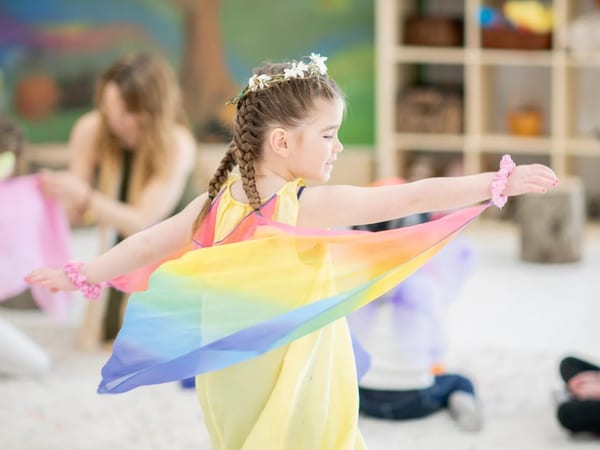
From free-form creative movement for toddlers to structured dance routines for school-age students, our dance activities develop spatial awareness, self-expression, and physical confidence. Students explore styles including creative movement, folk dance, and rhythmic gymnastics.
Rhythm & Coordination Development
Rhythm is the heartbeat of our program. Through clapping, drumming, movement games, and call-and-response activities, students develop timing, coordination, and the neurological foundations that support reading, math, and social skills.
Age-Calibrated Learning
Music & Movement at Every Stage
Infants & Toddlers
Sound, Sensation & Early Rhythm
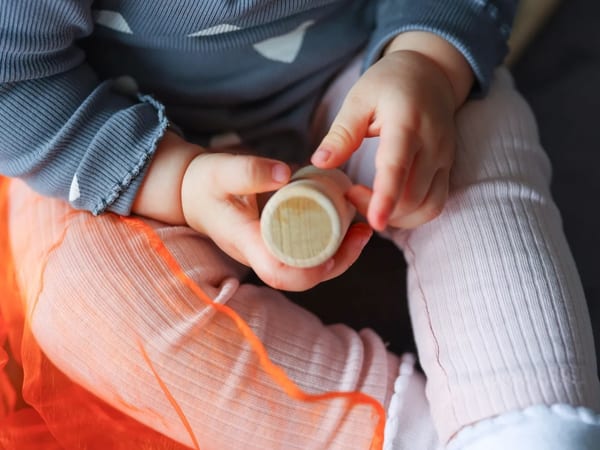
Our youngest students experience music through their whole bodies. Gentle lullabies, soft percussion instruments, movement songs, and caregiver-guided rhythm activities introduce the earliest concepts of beat, melody, and musical play in a nurturing, sensory-rich environment.
- Lullabies & soothing sound play
- Soft shakers & percussion exploration
- Movement songs with caregivers
- Sensory rhythm activities
Preschool
Singing, Instruments & Creative Movement
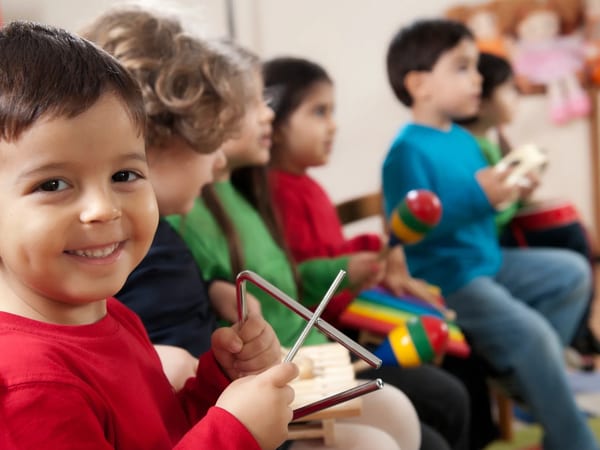
Preschoolers dive into group singing, instrument exploration, and imaginative movement activities. They learn to follow a beat, express emotions through dance, and collaborate musically with their peers — all while building language, memory, and social skills.
- Group singing & call-and-response
- Drums, shakers & rhythm sticks
- Creative movement & freeze dance
- Musical storytelling & songs
Pre-Kindergarten
Structured Music & Choreographed Movement
Pre-K students begin structured music instruction, exploring a wide variety of instruments and participating in choreographed movement sequences. Music theory concepts are introduced through play and song in a fun, engaging environment.
- Hands-on instrument exploration
- Introductory rhythm & notation
- Choreographed movement routines
- Music & math connections

School Age
Performance, Dance & Musical Mastery
School-age students develop real musical skills through instrument exploration, ensemble playing, and dance performance. Students build confidence, teamwork, and a lifelong love of the arts.
- Ensemble & group instrument play
- Dance styles: creative, folk & rhythmic
- Music composition & improvisation
- Confidence & teamwork through performance
Why It Matters
The Science Behind Music & Movement
Cognitive Development
Music training strengthens memory, attention, and the neural pathways that support reading and mathematics.
Emotional Regulation
Movement and music give children healthy outlets for self-expression and tools to manage their emotions.
Social Skills
Group music and dance activities build turn-taking, listening, cooperation, and a sense of belonging.
Physical Coordination
Rhythm and movement activities develop gross and fine motor skills, balance, and body awareness.
Language & Literacy
Songs, rhymes, and call-and-response activities accelerate vocabulary growth and phonological awareness.
Confidence & Self-Expression
Performing and creating music gives every child a voice and a stage to shine on their own terms.
Common Questions
Frequently Asked Questions
Let Your Child Find Their Rhythm
Schedule a tour at any of our 7 New Jersey campuses and see our Music & Movement program in action.